“The pipeline would cross nearly 300 creeks and streams and necessitate cutting 700,000 trees. The D.E.C. has recommended drilling six feet under all crossings, but the company plans to “trench” through most of them. Along with the massive tree-cutting on stream banks and hillsides, this would exacerbate flooding in a region already experiencing much stronger storms and floods. It would also harm dozens of trout streams and spawning areas, which the D.E.C. is charged with protecting. If the state does not exercise its authority to deny this certificate by April 26, the company will be allowed to proceed by default.
“Building this pipeline would undermine our commitment to fight climate change. Proponents of fracked gas argue that it can be a “bridge” fuel while we make the transition to renewable energy. They focus on the fact that when gas — which is largely methane — is burned, it releases half the CO2 of coal. But whether you see this glass as half empty or half full, it is being poured into an atmosphere that is already full — of CO2, having crossed the threshold of 400 parts per million last year. Also, methane, which can leak from gas infrastructure, traps heat 84 times as much as CO2 does over a 20-year period. A recent study led by Harvard researchers showed that in the Boston area methane is leaking from gas delivery systems at rates two to three times higher than industry estimates.
The Washington Post is cautiously taking a closer look at the problem of methane leaking from US shale gas operations and the network of pipelines that carry the gas to market. You have to read the article carefully, because the new and troubling evidence is couched in language that would lead a reader to think it was some sort of elusive puzzle. New fly-over studies with specialized sensors have recently confirmed what we have known since Dr. Ingraffea so effectively documented it — the wells leak. Specifically, the study found 4% of them leaking now. Dr. Ingraffea’s work predicts that more and more will leak with time.
The fossil fuel industry would have readers believe that it’s really cows belching, but the evidence has been clear for a long time that shale gas fracking sites are a significant source of atmospheric methane. The agricultural and natural sources are also important, but that does not let the extraction industry off the hook.
The Washington Post is now reporting what I feared was coming when I testified at the Pipeline task force and the DRBC. The Bust is evident for all to see – or it should be. But the momentum is hard to resist and unwarranted optimism is fueled by people who earn their money by drilling holes and laying pipe. The get paid by those who gamble that once they own the well and the pipe money will just flow out of the ground and pay them back.
Will Governor Wolf and those who are expediting pipeline construction and who speak in rosy terms of Philadelphia becoming an energy hub see that the harm they are doing in the name of progress will become both a financial and environmental disaster?
It’s not just that there is already too much gas production, it’s clearer every day that the jig is up on denying climate change. The flood of alarming scientific confirmation is swelling. Will world demand ever grow to absorb the excess capacity? For the sake of our grandchildren we hope not.
“Global warming is, in the end, not about the noisy political battles here on the planet’s surface. It actually happens in constant, silent interactions in the atmosphere, where the molecular structure of certain gases traps heat that would otherwise radiate back out to space. If you get the chemistry wrong, it doesn’t matter how many landmark climate agreements you sign or how many speeches you give. And it appears the United States may have gotten the chemistry wrong. Really wrong.” [emphasis added]
Bill McKibben opens his compelling overview of the US response to the threat of global warming with these grave words in his article that appeared in The Nation. This is not news to our regular readers but McKibben does a masterful job of making the case. As founder of 350.org, a Schumann Distinguished Scholar, and winner of the Ghandi Peace Award, McKibben has long been a credible source. He translates his panoramic knowledge of environmental science into terms the rest of us can grasp.
December 9th, 2015, 9:15 am. In just a few minutes I will be leaving home to testify at the Delaware River Basin Commission’s (DRBC) business meeting. These five people representing New York, Pennsylvania, Maryland, Delaware and the US Government grant permits for projects that impinge on the watershed or the Delaware River itself. So they decide about pipelines, drilling of wells, and industrial processes on the river banks. They have a moratorium in place on shale gas extraction permits in the basin. But they are considering allowing pipelines to cross the watershed and the river. Here is what I plan to say:
DRBC
I am Richmond Shreve, of Newtown, PA. I’m a grandfather concerned for his grandchildren’s future and I’m here to speak for them. I want to be sure that each of you is mindful of the effect of your decisions on their future not just in terms of stewardship of the Delaware River, but in terms of global environment.
Only half of the 9,000 shale gas wells already drilled in Pennsylvania are in production. Yet the glut of domestic gas has driven the price per million BTU as low as $2 and forecasters don’t see it going above $3.40 until 2020 or later. And 16,000 more drilling permits are already approved.
These numbers tell us the market is already in oversupply with more is coming on line. We are moving from an energy boom to an energy bust.
Sure, Japan and other countries may pay a premium price to buy and burn some of the excess. But you and I know that atmospheric carbon is changing the climate. The world’s present known reserve of fossil fuels represents five times what it will take to exceed the 2 degrees centigrade tipping point and trigger a century of catastrophic global warming.
We must not burn all that carbon fuel. If we do, our grandchildren’s prospects look grim. So when you are asked to permit more pipelines, or to allow more fracking, or to accept toxic waste facilities I beg you to be mindful of all the consequences. You are like the legendary Casey Jones at the throttle of a colossal engine racing toward a train wreck.
Don’t leave your grandchildren to say, “They didn’t see it coming. They couldn’t stop it.”
Public comments like mine are allowed only two minutes, sometimes less. So I will have to read fast. I’m hoping my words will speak to their hearts and stiffen their resistance to the enormous pressure to get gas out of the ground and sell it to the highest bidder. If you share my hope, print this post and attach it to a handwritten note to your legislative representatives both state and federal. Perhaps what can’t be acknowledged for political reasons will be acknowledged for personal ones.
Fractracker.org has a disturbing animation available showing the proliferation of shale gas wells since 2005. Take a look, then read on.
Pennsylvania’s Drake Well is known for sparking the first oil boom in the United States in 1859. In more recent history, the industry has resurrected hydrocarbon extraction in the Commonwealth through unconventional oil and gas drilling – or fracking. Between 2002 and October 28, 2015, at least 16,826 of these high-impact wells have been approved statewide, and 9,508 drilled.
~ fractracker.org
Need I remind you that each of these wells will require a collector pipeline to carry the gas to a compressor station. At the compressor station a dozen or so 9000 horsepower engines drive massive, very loud compressors that raise the gas to pipeline pressures (1,200 pounds per square inch) and remove the components they don’t want in the pipeline with the gas (dirt, volatile organics, liquids). These they burn off with flares or simply vent to the air. The compressor station needs a large pipeline carry the gas to a still larger (30 inch diameter) interstate pipeline that takes it to market. These interstate lines have factory-size compressor stations every 40 miles.
Consider this — with only about half the 9,508 drilled wells connected to pipelines and producing we already have a glut of gas on the market — way more than needed for domestic demand. This same scenario exists worldwide. No wonder natural gas is super cheap. When (and if) all 16,826 permits result in producing wells, who is going to buy the gas? We are nowhere near maxed-out on permits and drilling opportunities.
Consider also — most forward-looking people realize that global warming (climate change) is real and the opportunity to ameliorate it will be lost if we fail to make a fast switch to non-carbon energy. More and cheaper natural gas is not needed and not in the public interest … no, it’s not the cleaner “bridge” fuel we once thought (watch the Ingraffea video to see why). The market for gas must contract, not expand.
Despite these realities, the people who drill wells, lay pipelines, and build and lease the machinery have too much invested to look for other careers — they want to drill and pipe and lease equipment until the unwary investors wake up and stop the gravy train. Halliburton and lots of less familiar names will continue to push shale gas extraction so long as there is a buck to be made in it.
Infrastructure Task Force was well covered by the Media
I attended the October 28th meeting of Governor Wolf’s Infrastructure Task Force. It was conceived in an attempt to harmonize the development of pipelines needed by the shale gas industry with Pennsylvanian’s fears and concerns about the impact of pipeline and compressor station construction. Steamfitters are needed to weld together these pipelines because each pipeline is a huge pressure vessel miles long that is capable of exploding with disastrous consequences. Construction requires that huge linear tracts of land be cleared and excavated, often by legal condemnation and taking against the will of the property owners.
I recognize that most such task forces are created as a delaying tactic by politicians. They often labor for years, grind out a great tome of a report which few ever actually read except to capture an occasional media sound bite. Not this task force. It has been completely co-opted by shale gas interests and is functioning as a boot camp to forge the access and relationships between regulatory personnel of the Federal and State governments and their industry counterparts. Hundreds of “volunteers” (people from industry) have been working with government employees to draft the task force report that will make recommendations intended to expedite the construction of a vast grid of collector and transmission pipelines slashing through every county in Pennsylvania. One gets the impression that the agencies that protect our forests and streams, our historical sites, our game and wildlife, and our property rights are seen as inconvenient impediments.
This taskforce has moved with an alacrity that is rare indeed for a government undertaking. Its draft report is due in November, and its final report in February 2016.
Boom Mentality
The Marcellus shale gas boom has created wells that need pipelines to get their product to market. Those who build the pipelines see a decade of steady, lucrative work ahead. Those who own wells with no connection to the grid desperately want to begin recovering their invested capital. This has created a blindness that I have seen before in the real estate booms that happened over my 35 years of running an industrial park development. Toward the end of each boom cycle there are always investors and developers that arrive late to the party and are just getting started as the band stops playing and everyone goes home.
In the 1980’s when I was new to the business I went to a lot of industry trade shows to learn my way around and rub shoulders with other more experienced investors. I recall having conversations with developers who were still starting new projects when there was a vacancy rate of 35% in existing office space. I was puzzled at how they hoped to succeed when the demand for space was so low. In most of my conversations the developers told me how their building had features like wiring for computer networks that would make it much more attractive than the competition. I wasn’t convinced.
The real answer was at last revealed when one of these men saw my disbelief and whispered, “Besides, the bank is our partner!” By this he meant that most of the skin in the development game is not the developer’s; it’s the bank’s. Those who build the buildings arrange financing through banks and third parties. All through the construction these developers are paying the bills, and themselves, with other people’s money. If the completed building sits vacant, they have already made most of their money and the financial risk is on the investors. Donald Trump famously said, “If you owe the bank $100,000 you’re in trouble. If you owe the bank $100,000,000, they are in trouble. A builder meets his payrolls and keeps the doors open despite the lack of demand for the product, so long as financing is available.
Bust Blindness in Shale Gas Development
The carbon fuel party is just about over. Science has been telling us for years that we have stayed too long and it’s time to move on to renewable energy sources. Global warming is real and we are witnessing the disruptions to weather patterns and ocean currents in ever more dramatic ways. Hurricane Patricia, the category 5 storm that broke all records for intensity was only the latest example. In science, proof lags awareness by years. So we anticipate more and worse consequences coming from our reliance on fossil fuels, we just haven’t proved them yet.
Those who drill wells and build pipelines are not ready for the dance to end. Like my colleagues in the real estate business, they plan to keep it going as long as they can. They just don’t (or won’t) see what’s coming, and besides the bank is their partner.
In addition to climate change there are other clear signals that the shale boom is over. Gas production already exceeds domestic demand, prices are low for gas and oil. The higher prices that accelerated the shale gas boom are over. Producing more gas at a faster rate will only make the global price drop more. Far too many shale gas developments world-wide are driving prices down. Cartels in the Middle East have responded to the competitive threat posed by shale gas with price reductions calculated to make new fossil energy production unprofitable.
These low prices have already put the damper on new exploration, and made the finances of shale gas developers shaky. The have had a negative effect on renewable energy as well, but renewable technology continues to advance and become more competitive in spite of cheap carbon fuel. Entrepreneurs like Elon Musk (Tesla) recognize that the renewable party is just getting started.
Soon the global effects of carbon fuels will be undeniable. Governments will impose carbon taxes and other remediation measures in an effort curtail use and mitigate the damage. These measures are already too late to prevent dramatic changes in fresh water availability, sea level, and oceanic biology. Species that can’t adapt are already vanishing. Humans can migrate and will find ways to survive the changing environment, but one would be foolish to think that the adjustments will happen without hardship and strife. Consider the heat wave in Pakistan where temperatures rose to 110 degrees Fahrenheit, killing those who could not tolerate the heat or find shelter from it.
There will be unprecedented famines. The fresh water our generation regards as a birthright will become a valuable commodity in commerce. You’re skeptical? Thames Water and other large multi-nationals are buying up water systems globally.
Race for the Abyss
The people seated at the Infrastructure Task Force table are racing to build their pipe network because there’s money to be made while the band still plays. The long-term costs, both economic and social are not their concern. Each individual is a player in a game that pays too well to quit. As consultants or employees they don’t have the motivation to say, “Hey, we shouldn’t be doing this.” The CEOs of their companies, aren’t likely to call for a halt. The undepreciated capital investment it too great, and it still looks possible to keep on dancing. But those who finance them are getting shy. And those of us who see what’s coming are divesting from fossil fuel stocks.
All of the public comments were critical.
I was given only two minutes to speak at Wednesday’s Infrastructure Task Force meeting. There wasn’t time to paint the picture as I have here. I could only summarize what I have seen and conclude with an old man’s warning that the carbon bubble will break and that they will be telling their children or grandchildren “I just didn’t see it coming.”
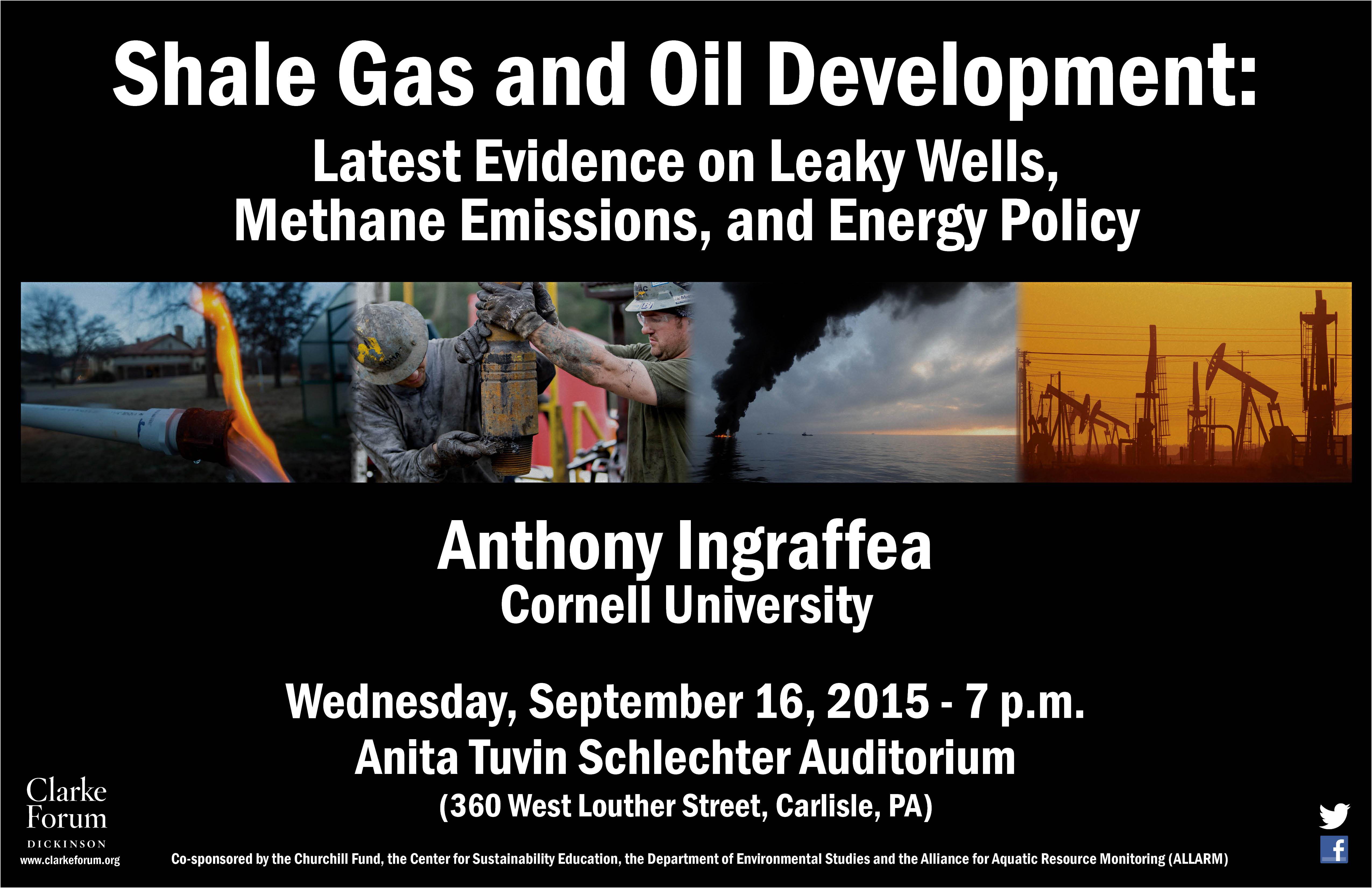
I was at the live presentation and I highly recommend that you watch the video. Professor Ingraffea, like so many brilliant scholars, makes his talk interesting and at times amusing despite its complexity. This lecture is very accessible and rigorously grounded in factual information. You can trust Ingraffea’s analysis, and if you are skeptical, you can go right to his sources. I’m eager to get this link up on the site now, and hope to make time to review it and quote some highlights later.
That’s right, Pennsylvania has about 200,000 abandoned oil and gas wells and doesn’t know where 96% of them are. We also don’t know if they have been plugged. This is a problem when new wells are fracked because the old wells can be an open conduit between the newly fractured strata and other layers or the surface. The gas migrates into drinking water or into buildings where it can explode. Abandoned wells are only one of may ways that gas and oil can migrate from a well site, but they have produced spectacular leaks, and frightening consequences.
StateImpact, the NPR series on shale gas, has a series of articles dating back to 2012 that document the surprising lack of record keeping and oversight that characterize Pennsylvania’s inept management of drilling over the years. These old wells are costly to locate an plug, and the state is hampered by limited funding. As you might expect, those who profited from these wells were not and are not accountable for the problems they left behind.
Many people see stewardship of our environment as a moral issue. The world’s great religions call their followers to love one another and be stewards of all creation. Climate disruption has moral and social justice implications that are the common concern of all faithful people. The forum announced in the flyer below affords a great opportunity to explore and discuss how faith informs our efforts to ensure a safe healthy planet for future generations.
The call to environmental stewardship is nearly universal. Citizens Climate Education has published a book of statements by world faith leaders titled Faith Based Statements on Climate Change. Copies are available from them – 1330 Orange Avenue #300, Coronado, CA 92118; 609 437-7142.
132 Page book of Statements by World Faith Leaders.


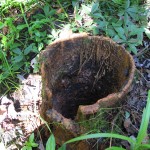 We also don’t know if they have been plugged. This is a problem when new wells are fracked because the old wells can be an open conduit between the newly fractured strata and other layers or the surface. The gas migrates into drinking water or into buildings where it can explode. Abandoned wells are only one of may ways that gas and oil can migrate from a well site, but they have produced spectacular leaks, and frightening consequences.

You must be logged in to post a comment.