For the same reasons that you don’t want a locomotive in your backyard you probably don’t want a pipeline compressor station. This article describes the problems with noise and pollution of the air. Sometimes citizens are asked to deal with the harm done because it is in the larger public interest to allow such things. But pipelines do not qualify for such sacrifice. (more…)
Category: Uncategorized
Support Representative Government
Gerrymandering is one of the anti-democracy tactics politicians use to protect themselves from accountability for the favors they do for the energy industry. Here is an opportunity to speak up for yourself and your community.
Take Action (It’s easy.)
Fair legislative districts, where your vote is equal to everyone else’s, are fundamental to a government by the people and for the people. One of the biggest causes of dysfunction in our Pennsylvania state government is gerrymandering where the politicians pick their voters thus gaming the system to preserve their power. Coupled with the influence of energy money it has been a detriment to all citizens of PA. Here’s a chance to do something good.
Frackwater: Regulation = Protection
It’s popular these days for politicians to talk about “regulatory overreach” and how it puts a damper on business. Here is an example of lax regulators allowing the drilling industry to save a buck by dumping drilling waste on roads instead of disposing of it safely — if safe disposal is even possible.
The writers at State Impact document a case in point …

A truck sprays a dust suppressant on a dirt road in Pennsylvania. Some communities in Northwest Pennsylvania use conventional oil and gas waste as a suppressant. Photo: Center for Dirt and Gravel Road Studies Is anybody looking out for the public interest in PA? We are allowing drilling, fracking, and extraction with little revenue to the commonwealth. We are tolerating the environmental damage and health problems these activities are proven to cause. We are condemning private land to build a vast network of 30,000 miles of pipeline. And who benefits? Not the locals, not the residents of the state. All of this permitting is done so that the energy industry can collect gas, liquefy it, and ship it overseas to be burned.
The glut of gas on domestic markets has made gas cheap. That’s bad for the energy business, and it makes it harder for green energy sources to compete. Our public interest dictates that we wean our economy from carbon. Alternative energy creates more jobs and gives our kids a chance for a healthy future.
Think about this when you vote.
DRBC Bans Fracking But Not Frackwater
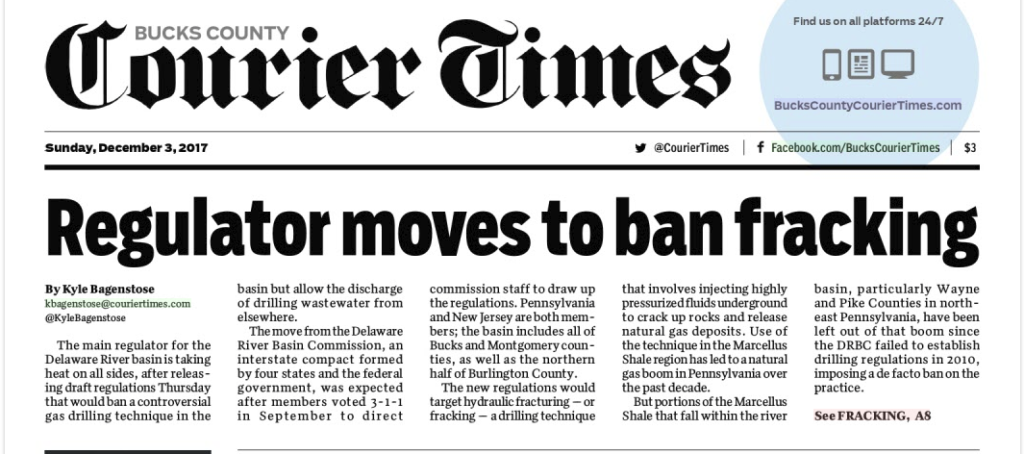
It’s certainly worthy of the headlines it is getting. If indeed the final regulations prevent drilling in the Delaware River Basin, that is a very good thing. But the idea of discharging millions of gallons of poisoned water into the Delaware is bad. “Dilution is not the solution.” If fracking wastewater can’t be made pristine again, it should not go into the river we drink from.
The Scary Physics of Deep Disposal Wells
If you fill a vertical pipe with water, the weight of the water produces pressure at the bottom of the pipe. That’s why we have water towers. A typical water tower is about 100 feet tall and produces about 40 to 50 pounds of pressure at ground level.
Imagine if you could build a water tower 10,000 feet (2 miles) high. The pressure would be 4,000 to 5,000 pounds. A deep well is like a tall water tower. The pressure at the bottom is equal to about half a pound a foot for each foot. That is the kind of pressure it takes to fracture rock layers. Deep disposal wells create that sort of pressure in the rock without the help of pumps because of the sheer weight of the water poured in at the top. Unlike the fracking process which last hours or days, the disposal well pressure is unrelenting. Over months and years and decades and centuries it is still there. The consequences are unpredictable. But Oklahomans have a pretty good idea what some of them are.

12,000 lb bottle jack Think about a hydraulic jack. A small piston or pump produces a high pressure per square inch. My travel trailer weighs 12,000 lbs. Yet I can lift it with a little bottle jack. (Click the picture to learn how it works.)
The deep well shaft is analogous to the pump part of the jack. The miles of subterranean porous rock surrounding that well are like the lifting piston. The drilling company would like us to believe that nothing will happen when they add tons of polluted frack waste water to the well. Good luck with that. Their little company, all its owners, and all its employees may be long dead, but that well will still be there trying to lift the miles of earth around it.
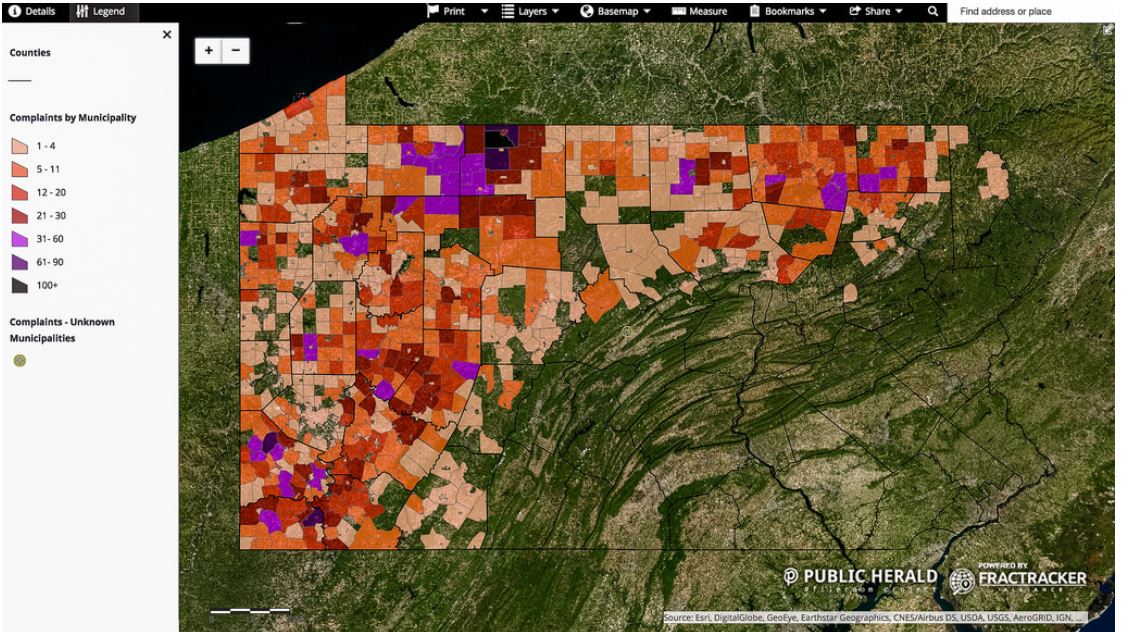
Complaints About Fracking Were Hidden
It is well known that fracking endangers the environment and health of local communities, but the energy industry lobby has successfully concealed the extent for many years. Recently the Federal regulators conceded that fracking has damaged aquifers, and now thanks to investigative reporting, evidence of citizens’ complaints has been made public for scrutiny. (Read more)
What Legislator’s Didn’t Know
Most of the body of law and regulation that governs fracking (drilling and hydraulic fracturing to extract oil and gas) was established years ago. But the science that accurately assesses health and environmental risks lags behind. A recent survey of scientific publications says:
While research continues to lag behind the rapid scaling of UNGD [unconventional natural gas development], there has been a surge of peer-reviewed scientific papers published in the past several years (Fig 1). By the end of 2015, over 80% of the peer reviewed scientific literature on shale and tight gas development has been published since January 1, 2013 and over 60% since January 1, 2014. This suggests an emerging understanding of the environmental and public health implications of UNGD in the scientific community. Yet, although numerous hazards and risks have been identified in studies to date, many data gaps remain. Notably, while there is now a far more substantive body of science than there was several years ago, there is still only a limited amount of epidemiology that explores associations between risk factors and health outcomes in human populations [1].

Most Science on Health Risks is Very Recent “Fools rush in …” as the saying goes. We know enough from the research and anecdotal reports available now to recognize substantial risks to communities where fracking is done near where people live and work. Our legislators are being lobbied by energy industry reps who seek to minimize the health risks and focus attention of the prospect of economic benefit. The effects of fracking are long-term, the economic benefit is relatively brief, and accrues mainly to large corporate interests, not to locals.
Everybody needs to slow down, reconsider the public risk, and assess who benefits. In my view, nothing justifies more fracking in Pennsylvania. The US doesn’t need it, and the planet is damaged by burning it.
Draft Oil and Gas Drilling Ordinance
Here is a copy of the Jointure’s drilling ordinance. In my opinion it falls far short of what is needed. It represents a minimalist approach (more…)
Solidarity
The Standing Rock Sioux are a long way from Bucks County, but the issue is not local to their land. The State of Pennsylvania embarked on a plan to expedite construction 30,000 miles of pipeline here in Pennsylvania. Virtually every county in the state would have land seized by eminent domain to facilitate getting shale gas to market. This is not a “NIMBY” not-in-my-back-yard issue. It is madness to rape the land and rush fossil fuels to market with the effects of global warming becoming more evident daily.
Resistance to the energy juggernaut that subverts democracy, ignores stewardship of the planet, and serves only private profit, is a national imperitive. As I write this on November 15, Marguerite and others are protesting in Doylestown, PA.
You must be logged in to post a comment.