
“Land Men” seek to get the rights to frack by signing land owners up. It seems like easy money, but the deal’s fine print and the process’s environmental effects can be devastating to locals.
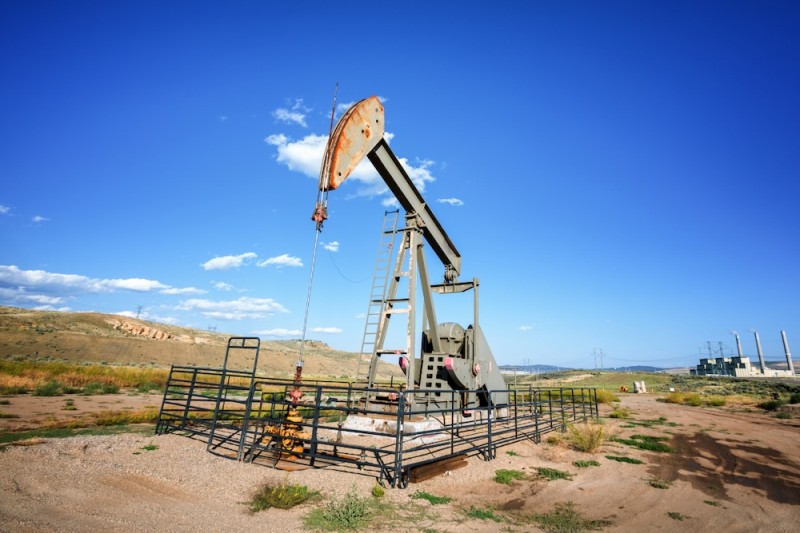
Lest We Be Complacent
As I’ve observed many times, nothing good comes to locals from fracking.

Ranchers reported abandoned oil wells spewing wastewater. A new study blames fracking. • Louisiana Illuminator
Fracking wastewater, injected underground for permanent disposal, traveled 12 miles through geological faults before bursting to the surface.
Keep it in the ground. Make energy profiteers pay for the damage.
Just how irresponsible can big oil be?
350.org has a documentary you might want to see.
Natural Gas Health Risks
Personally, I liked cooking with natural gas or propane. The instant response of the burner to my adjustments was easier to manage than the electric with its minutes of lag. However, a growing body of research is pointing to health problems with asthma caused by gas. So much of the world’s lethargic response to the dangers of dependence on fossil fuels is because we can’t immediately see the harm. We love the convenience and it’s cheap. But the insidious long term effects are costly in dollars and human suffering.

PSE Healthy Energy – Nitrogen Dioxide Exposure and Impacts from Gas Stoves
This peer-reviewed study, published in Science Advances, is the first to quantify the link between stoves and asthma due to nitrogen dioxide (NO2) exposures in the home.
Leave it in the ground.
Fracking Hurts Locals
Sara Rasmussen of Johns Hopkins reviews the science that establishes the harm that Fracking does to its neighbors. There is no free lunch- “mailbox money” comes with ruinous health consequences and impacts on quality of life. We need not mention that fossil fuels threaten life as we now know it and possibly the survival of large swaths of humanity. Those who make money in this dirty business work to suppress and discredit this sort of information.
Let’s keep the fossil fuels in the ground.
Reminder
Lest we become inured to the dangers we face …
Climate change quick facts:
• The Earth is now about 1.2 C warmer than it was in the 1800s.
(Source: United Nations IPCC, World Meteorological Organization, UNEP, NASA, climatedata.ca)
• 2023 was hottest on record globally, beating the last record in 2016.
• Human activities have raised atmospheric concentrations of CO2 by nearly 49 per cent above pre-industrial levels starting in 1850.
• The world is not on track to meet the Paris Agreement target to keep global temperature from exceeding 1.5 C above pre-industrial levels, the upper limit to avoid the worst fallout from climate change including sea level rise, and more intense drought, heat waves and wildfires.
• On the current path of carbon dioxide emissions, the temperature could increase by as much as 4.4 C by the end of the century.
• In April, 2022 greenhouse gas concentrations reached record new highs and show no sign of slowing.
• Emissions must drop 7.6 per cent per year from 2020 to 2030 to keep temperatures from exceeding 1.5 C and 2.7 per cent per year to stay below 2 C.
• 97 per cent of climate scientists agree that the climate is warming and that human beings are the cause.
Lithium Not a Justification
Buried in the body of one of the Lithium stories are these cautionary words:
Even if the process of extracting lithium proved to be cost-effective, Quigley said, it should not be used as a justification to keep drilling, though it was “inevitable” that the industry would try to use the finding that way. “It’s still not a reason to continue to drill, because it’s a waste product from fossil fuel extraction,” he said. “The economy has to be carbon free by 2050.”
Extracting lithium doesn’t solve the ongoing problem of what to do with the highly toxic wastewater produced by fracking, which contains salts, metals and radioactive elements. “There’s no way to clean this stuff up,” Quigley said. “You might be able to get something beneficial out of it. But you still have really nasty wastewater that you’ve got to get rid of.”
Quigley was reminded of previous claims made about the economic usefulness of the oil and gas industry’s wastewater in Pennsylvania. Spreading wastewater from conventional drilling on roadways to suppress dust was once considered “a beneficial reuse,” but now faces scrutiny for the risks it poses to the environment and human health, including water contamination and harm to aquatic wildlife. “That has proven to be a sham,” Quigley said. “Some beneficial reuses turned out not to be so beneficial.”
“You might be able to get something beneficial out of it. But you still have really nasty wastewater that you’ve got to get rid of.”
— John Quigley, a fellow at the Kleinman Center for Energy Policy and a former secretary of the Pennsylvania DEP and the state’s Department of Conservation and Natural Resources, as quoted in the article below.
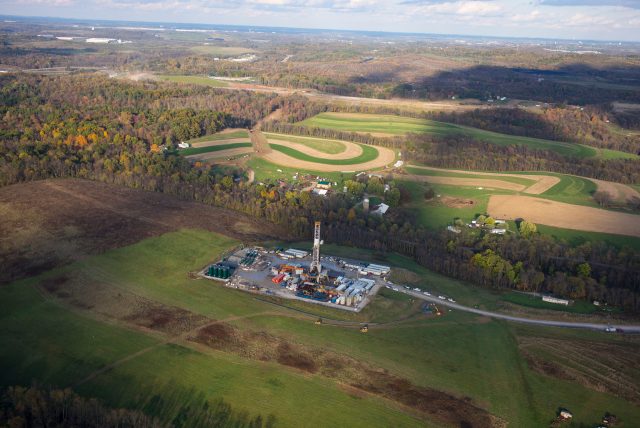
Expect a Lithium Rush
There is the smell of fresh greenwash in the air. It is highly unlikely that the prospect of Lithium as a byproduct will justify taking more natural gas out of the ground. Let us not forget that it’s a fossil fuel that has long been too abundant and cheap to produce. Producers don’t plan to meet domestic demand with it, they will liquify it and ship it elsewhere to make plastic and burn. When you net out all the negatives, producing gas and recovering Lithium will make the climate and environment worse.
We don’t see any of the producers volunteering to pick up the tab for remediating the past environmental problems like their leaky abandoned wells or to compensate for the damage done to people and nature. Here are some recent breathless articles.

Pennsylvania could become huge player in lithium mining
HARRISBURG (TNS) — Pennsylvania could become a massive contributor to the United States’ quest for lithium after scientists discovered a large reservoir of the chemical element in fracking wastewater outside

Giant, multi-billion-dollar source of lithium found under Pennsylvania
Over 1,200 tons of lithium could be recovered per year from Pennsylvania’s natural gas ‘fracking’ wastewater alone, according to US National Energy Technology Lab
Fracking does nothing to improve the environment. It hurts the locals and spews polluted water and lots of nasty toxic stuff.
Families Dislocated
I’ve observed that fracking does nothing good for the locals. Here another story that gives a face to the research statistics.

Fracking and Premature Births

Canadian researchers may have found link between fracking and premature births
According to a new study from the University of Calgary, there could be a link between oil and gas operations and health risks for pregnant women and their babies in those areas. “There is very little research about fracking as it relates to the health of pregnant people and children living near these sites,” Amy Metcalfe, a co-principal investigator and associate professor in obstetrics and…