The Washington Post is cautiously taking a closer look at the problem of methane leaking from US shale gas operations and the network of pipelines that carry the gas to market. You have to read the article carefully, because the new and troubling evidence is couched in language that would lead a reader to think it was some sort of elusive puzzle. New fly-over studies with specialized sensors have recently confirmed what we have known since Dr. Ingraffea so effectively documented it — the wells leak. Specifically, the study found 4% of them leaking now. Dr. Ingraffea’s work predicts that more and more will leak with time.
The fossil fuel industry would have readers believe that it’s really cows belching, but the evidence has been clear for a long time that shale gas fracking sites are a significant source of atmospheric methane. The agricultural and natural sources are also important, but that does not let the extraction industry off the hook.
A number of our friends and neighbors made the news today (Saturday) by joining Pennsylvania farmers protesting fracking. Here are some links, in case you missed the news:
That’s right, Pennsylvania has about 200,000 abandoned oil and gas wells and doesn’t know where 96% of them are. We also don’t know if they have been plugged. This is a problem when new wells are fracked because the old wells can be an open conduit between the newly fractured strata and other layers or the surface. The gas migrates into drinking water or into buildings where it can explode. Abandoned wells are only one of may ways that gas and oil can migrate from a well site, but they have produced spectacular leaks, and frightening consequences.
StateImpact, the NPR series on shale gas, has a series of articles dating back to 2012 that document the surprising lack of record keeping and oversight that characterize Pennsylvania’s inept management of drilling over the years. These old wells are costly to locate an plug, and the state is hampered by limited funding. As you might expect, those who profited from these wells were not and are not accountable for the problems they left behind.
That oil and gas interests might be reluctant to accept information pointing to the end of the fossil fuel era is completely understandable. But the just released report by the Union of Concerned Scientists titled The Climate Deception Dossierdocuments decades of deliberate deception aimed at sewing doubt in the media and the public’s perception of climate science. The report reveals industry internal secret documents that prove there has been a strategy to hide the truth. It’s little wonder that so many politicians today find it easy to deny the opinion of 97% of the scientific community. They’ve been blinded by money and duped with lies.
Proof of decades of deception by fossil fuel industry: Union of Concerned Scientists.
I can’t improve on the summary that appears in the summer issue of UCS’s journal, so I urge you to read it for yourself and then browse through the report that it announces. Although those few who have been close to the issue for years knew of various elements of the deception, the strategy was largely successful and history may yet look back upon the years since 1988 as the beginning of society’s greatest and most disastrous propaganda lies.
For those who follow NoFrackingBucks.net there is a disturbing confirmation that the oil and gas industry is ruthless and unrelenting in its hunger to expand regardless of the cost to society and future generations. Although our focus is very local, the menace is global and it will touch everyone – especially the poorest and most vulnerable nations.
We must consider both actions and words in weighing arguments about fossil energy. On the fracking issue, the industry has gotten legislation to exempt itself from regulations aimed at protecting the environment, and has succeeded in getting other legislation that severely limits the ability of local government to protect municipalities from the ravages of gas and oil extraction. These self-serving legislative campaigns are perverse and destructive. The deception and amoral (some might say psychopathic) campaign to discourage society from acting prudently in the face of a clear danger is a disgrace. If you agree, take the time to phone your state representatives and your US senators and congressman. Tell them to read the evidence and see for themselves how we all have been duped. Demand that public policy reflect climate reality.
Because the fracked cracks can extend some 2,000 feet above the well bore hole, wells that lie less than a mile (5,280 feet) below the surface pose a higher risk for water contamination. According to Stanford University scientist Robert Jackson:
“Not all shallow wells pose the same threat to groundwater. The “riskiest” fracked wells are both shallow and use high levels of water—1 million gallons or more, said Jackson. Studies have shown that when these high-pressure wells fracture the bedrock, the cracks can extend as much as 2,000 feet upward. This provides an opportunity for the chemical-laced water used in fracking to migrate to the shallower depths of the water table. And the smaller the gap between drilling and surface water, the greater the chance of interaction.”
Water in eastern Bucks is supposed to be perched atop bedrock that lies between 100 and 250 feet below the surface. Sampling a few records in the domestic well database I found wells drilled to depths of 500 feet below the ground level in Wrightstown, and 300 feet in Newtown Township, but the ups and downs of local terrain influence the depth relative to the geological data. Some of the drillers reported drilling through bedrock at less than 10 feet. Some wells are for withdrawal of potable water, others are used for geothermal heat.
Most of the aquifer is recharged by infiltration from the surface and nearby streams and the Delaware River. The shale gas layers that have fair to good gas potential begin at 3,000 feet. Simple math says that hydraulic fracturing could reach to within 500 feet of layers reached by domestic water wells. One can’t know, of course, what natural fissure and cracks may exist in the bedrock that might provide pathways for fracking chemicals pumped into the ground at 9,000 psi to find there way upward. But the notion that “miles of bedrock” lie between the fracked layer and the water layer simply is not true in the Newark Basin.
Given the poor record of the gas and oil drilling industry for predicting or preventing leaks, it would seem very risky to do shallow fracking. If it were to be allowed, there should be mandatory independent monitoring of groundwater quality utilizing test wells near the drill pad. Equally important there must be substantial financial bonding and insurance requirements to fund remediation should methane or fracking chemical contamination be found.
One of our contributors discovered “Explore a Fracking Operation – Virtually” – a website that lets you see photographs of the various stages of fracking operations. Those who have not traveled to the regions where fracking is done may be surprised at the scale of this industry. Well drilling and fracking requires hundreds of heavy vehicles and a logistics reminicent of a large scale military mobilization. Check it out by clicking the illustration below:
Screenshot of FrackTracker Website.
You will find another excellent website at R-CAUSE.net. Like this site, it seeks to inform its constituency about the risks of fracking. Although New York has banned fracking, there continue to be threats to water and air in the Rochester and Corning areas.
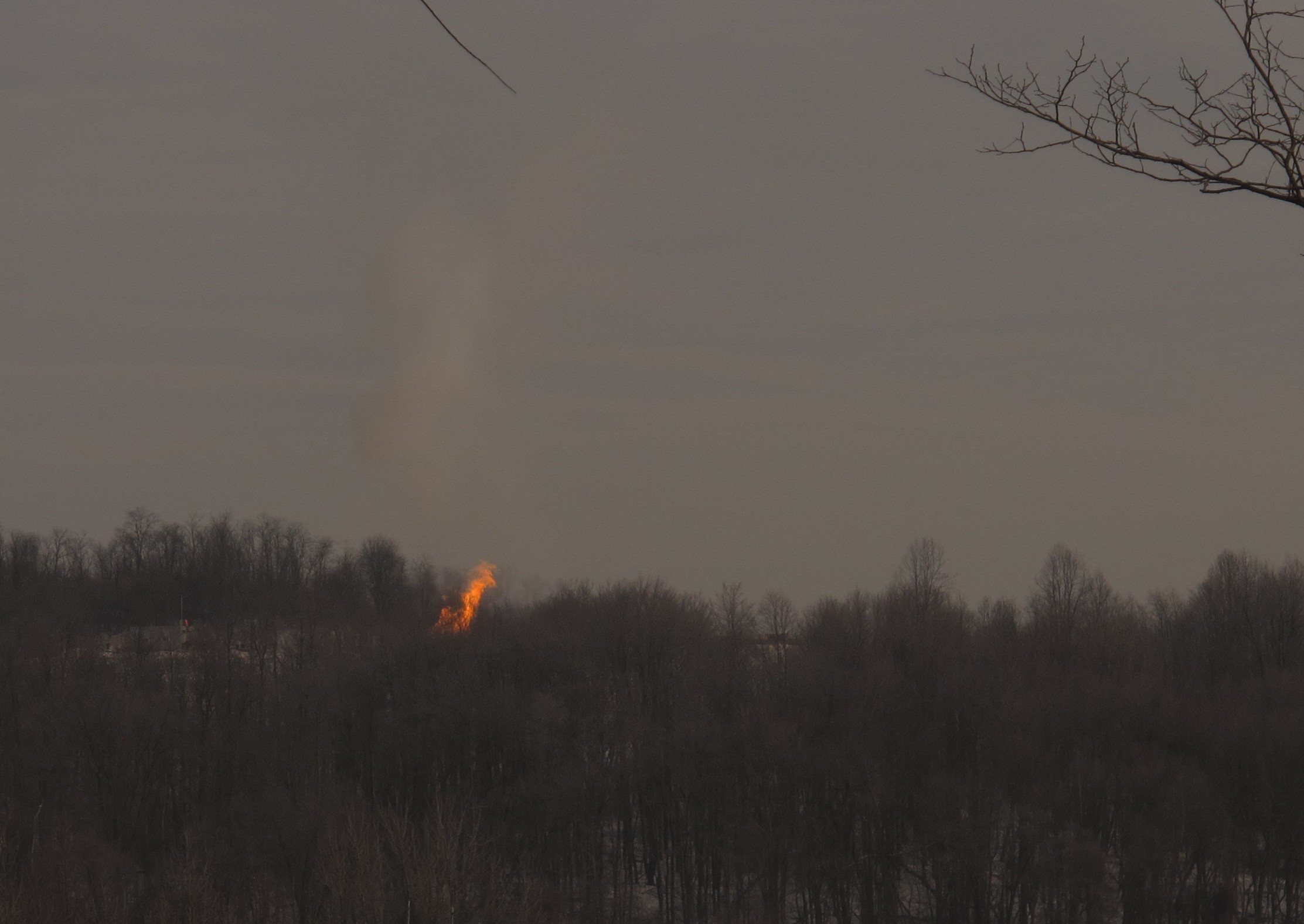
In a June 1st, 2015 article StateImpact reports on the gas well fire that sent flame so high into the air that the flames were visible for miles above the tree tops. Kati Coleneri reports, “Fires at two wells in Dunkard Township, Greene County burned for several days before they could be extinguished, but it took more than one week to find the remains of Ian McKee, 27, a contractor with Texas-based Cameron International who was killed in the blast.”
Katie Colaneri/ StateImpact Pennsylvania. A fire broke out on a Chevron natural gas well pad in Dunkard Township, Greene County, Pa. on Feb. 11, 2014.
Reports like this underscore the hazards of drilling anywhere near where people work or play. The $940,000 fine and the $5,000,000 settlement with McKee’s family dramatize the magnitude of the risks. Little wonder that insurance companies and mortgage lenders shy away from drilling sites. It also underscores how woefully inadequate the proposed ordinance being considered by the Jointure would be if enacted. It provides for unspecified insurance, and a maximum $50,000 financial security, described as laughable by critics.
As a former firefighter I confess I have no idea how to fight such a blaze. I don’t imagine that the first responders of our local communities do either. Well fires often require special teams to be flown in who are equipped with tools and techniques to snuff the flames and cut the flow.
I was shocked to see that PA State investigators were denied access to the site for two days and that there was no penalty assessed for doing so. What protections does state DEP oversight offer if a company with apparent violations can prevent the regulators from inspecting? It suggests that the gas industry has way too much influence in Harrisburgh.
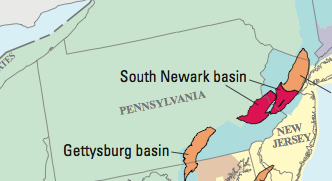
There is a moratorium on drilling until 2018 in our area. Until it ends there won’t be any drilling in Bucks County we are told. But two years ago in June 2013, “the U.S. Geological Survey released a report estimating the South Newark Basin could yield between 363 billion cubic feet and 1,698 billion cubic feet of natural gas,” according to Katie Colaneriwriting for NPR. That’s the prize and the answer to the question.
Screenshot from the U.S. Geological Survey The South Newark Basin stretches from New Jersey down into Bucks and Montgomery Counties. (NPR)
Shortly after thatUSGS Report the State of Pennsylvania funded a study of gas drilling in Bucks and Montgomery Counties. The contract was slated to end on June 30, 2015, so the results will be known well before the moratorium ends. The savvy executives of energy companies are certainly not sleeping, and are very aware of the opportunity.
Bucks County is close to markets and transportation for the gas and it has existing pipelines, albeit rather old ones, in the area. If you make your money extracting gas, what’s not to like?
Well there is the local reaction to think of. Zoning could get sticky. But if you make all the right moves you can avoid the pitch forks and barrel staves.
The Pennsylvania Association of Township Supervisors (PSATS) described the impact of drilling on affected communities in their 2015-16 Policy Statement as follows:
Townships feel impact
Formerly quiet townships have been
transformed by the drilling industry. Small
rural roads that once carried a few dozen
cars a day have become the site of daily
traffic jams, the result of hundreds of
heavy water-filled tanker trucks for frack-
ing, stone trucks for site development,
and pipe and drilling rigs transporting the
needed equipment to the often mountain-
ous and rural sites. Local and state roads
disintegrated under the weight of the
loads, at times within days, if not hours.
Out-of-state workers for the drilling
companies competed for rental proper-
ties and hotel rooms, escalating housing
costs and displacing tourists. Emergency
responders faced new challenges without
needed equipment or training. And resi-
dents expressed concern over the future of
their water supply.”
The article applauds the $600 million in “natural gas impact fees” of which 60% was passed through to municipalities to help offset the damages. While the article is generally upbeat and positive about the economic benefits of the gas industry (jobs, higher wages, royalties) it avoids discussion of health and environmental issues. The photographs of drilling sites are impressive and interesting, but few would want to be viewing them from a bedroom window. One can’t help wonder if the writer was trying to put lipstick on the proverbial pig. (Read the full article here.)
“In the past four years, the number of peer-reviewed studies on shale drilling and fracking has gone from almost zero to more than four hundred, according to the Physicians Scientists & Engineers for Healthy Energy public database. That’s a lot of data, with topics including health impacts, air pollution, water contamination, seismic impacts (including earthquakes), wastewater, engineering issues, climate impacts, and economics.
Dimock, PA fracking site. Dimock’s well water was contaminated with dissolved methane. Details at http://stateimpact.npr.org/pennsylvania/tag/dimock/
And the overwhelming consensus from this thorough, objective, independent and rigorous analysis is that fracking has serious dangers and the best course of action is to prohibit fracking.” ~ Larysa Dyrszka, MD and Mary Menapace, RN … (read more)
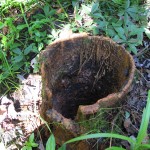 We also don’t know if they have been plugged. This is a problem when new wells are fracked because the old wells can be an open conduit between the newly fractured strata and other layers or the surface. The gas migrates into drinking water or into buildings where it can explode. Abandoned wells are only one of may ways that gas and oil can migrate from a well site, but they have produced spectacular leaks, and frightening consequences.


You must be logged in to post a comment.