“The 2018 edition of the Compendium of Scientific, Medical, and Media Findings Demonstrating Risks and Harms of Fracking updates the rapidly expanding evidence indicating harm to health from fracking and methane infrastructure.”

“The 2018 edition of the Compendium of Scientific, Medical, and Media Findings Demonstrating Risks and Harms of Fracking updates the rapidly expanding evidence indicating harm to health from fracking and methane infrastructure.”
The op-ed below (We Don’t Need Another Superfund Site) expresses the sentiments of many in Bucks County. Putting toxic wase processing in a floodplain on the banks of the Delaware is foolish. The reason these things are subject to regulation and permitting is because they are dangerous and require public permission for the risk.

This is not news to followers of this blog, but we applaud the telling of the tale of misery and exploitation of ordinary Pennsylvanians. Click through and read the book review, buy the book, and send your comments to your PA legislators. It is the politicians who have enabled this travesty. They need to know that we are fed up with the corruption, self-interest, and abuse.
The legislators and courts of Pennsylvania are on the side of the fossil fuel developers and are supporting the development of pipelines through privately owned lands. Using the sovereign power of eminent domain to take the land from its owners, the state enables pipeline developers to get their toxic product to market. This is not for the benefit of the people of Pennsylvania, but for the special interests that are extracting the natural gas and selling it for profit.
When eminent domain is used to provide highways, public transportation, or the delivery of needed utilities people generally grudgingly accept that it is justified for the greater good of all. But this is not even remotely the case here. There is a surplus of gas. The new pipelines have a purely commercial purpose. And that purpose is not in the public interest. Burning that gas, or making plastic from it, anywhere on the planet creates hazards to health that will persist for generations. It should stay in the ground, and Pennsylvania should not be compelling people to sell their land for pipelines.
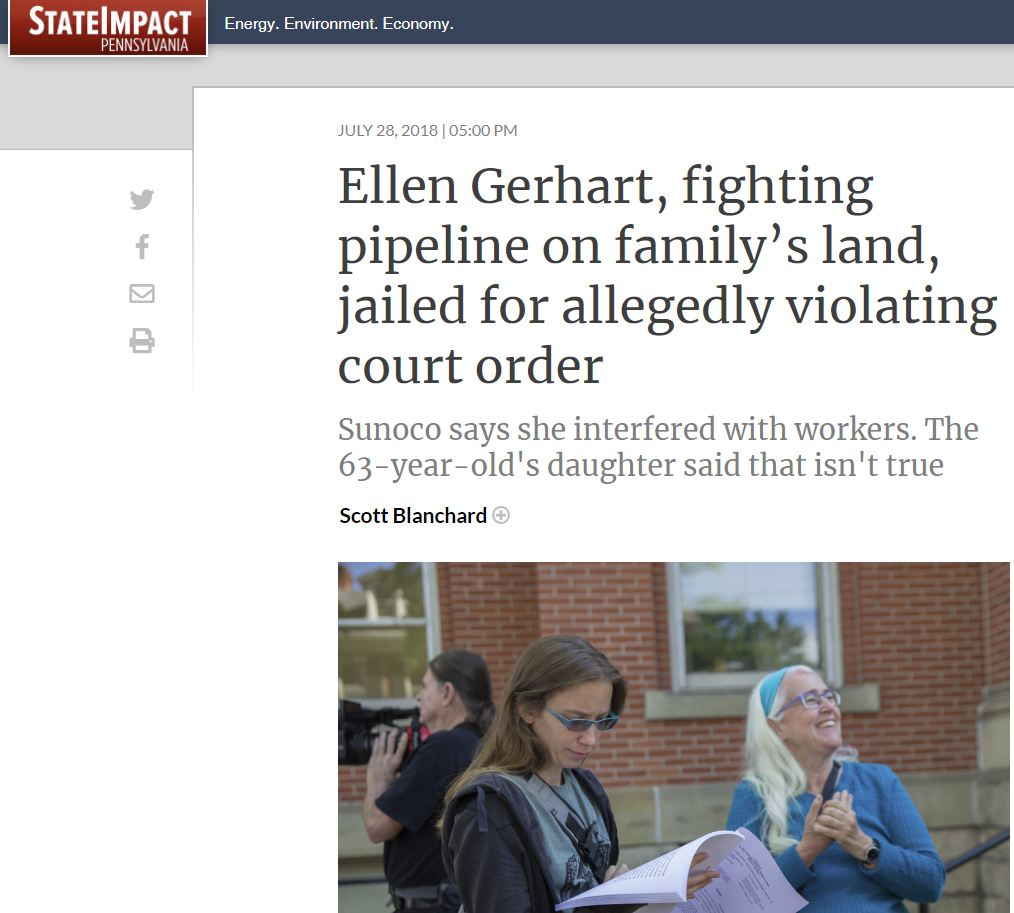
We can’t help but sympathize with Ellen Gerhart and others whose lives and homesteads are being savaged. (Click to read article)
For the same reasons that you don’t want a locomotive in your backyard you probably don’t want a pipeline compressor station. This article describes the problems with noise and pollution of the air. Sometimes citizens are asked to deal with the harm done because it is in the larger public interest to allow such things. But pipelines do not qualify for such sacrifice. (more…)
Gerrymandering is one of the anti-democracy tactics politicians use to protect themselves from accountability for the favors they do for the energy industry. Here is an opportunity to speak up for yourself and your community.
Fair legislative districts, where your vote is equal to everyone else’s, are fundamental to a government by the people and for the people. One of the biggest causes of dysfunction in our Pennsylvania state government is gerrymandering where the politicians pick their voters thus gaming the system to preserve their power. Coupled with the influence of energy money it has been a detriment to all citizens of PA. Here’s a chance to do something good.
It’s popular these days for politicians to talk about “regulatory overreach” and how it puts a damper on business. Here is an example of lax regulators allowing the drilling industry to save a buck by dumping drilling waste on roads instead of disposing of it safely — if safe disposal is even possible.
The writers at State Impact document a case in point …

Is anybody looking out for the public interest in PA? We are allowing drilling, fracking, and extraction with little revenue to the commonwealth. We are tolerating the environmental damage and health problems these activities are proven to cause. We are condemning private land to build a vast network of 30,000 miles of pipeline. And who benefits? Not the locals, not the residents of the state. All of this permitting is done so that the energy industry can collect gas, liquefy it, and ship it overseas to be burned.
The glut of gas on domestic markets has made gas cheap. That’s bad for the energy business, and it makes it harder for green energy sources to compete. Our public interest dictates that we wean our economy from carbon. Alternative energy creates more jobs and gives our kids a chance for a healthy future.
Think about this when you vote.
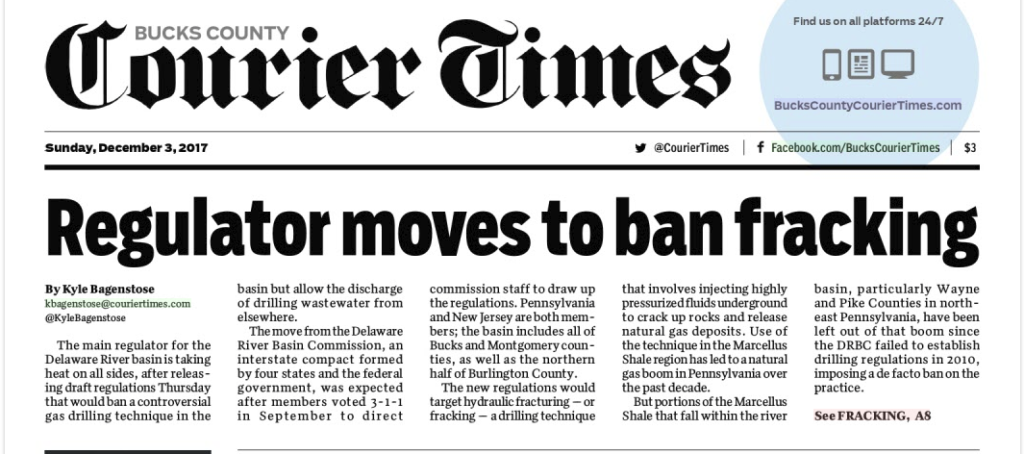
It’s certainly worthy of the headlines it is getting. If indeed the final regulations prevent drilling in the Delaware River Basin, that is a very good thing. But the idea of discharging millions of gallons of poisoned water into the Delaware is bad. “Dilution is not the solution.” If fracking wastewater can’t be made pristine again, it should not go into the river we drink from.
You must be logged in to post a comment.